Student Achievement
-
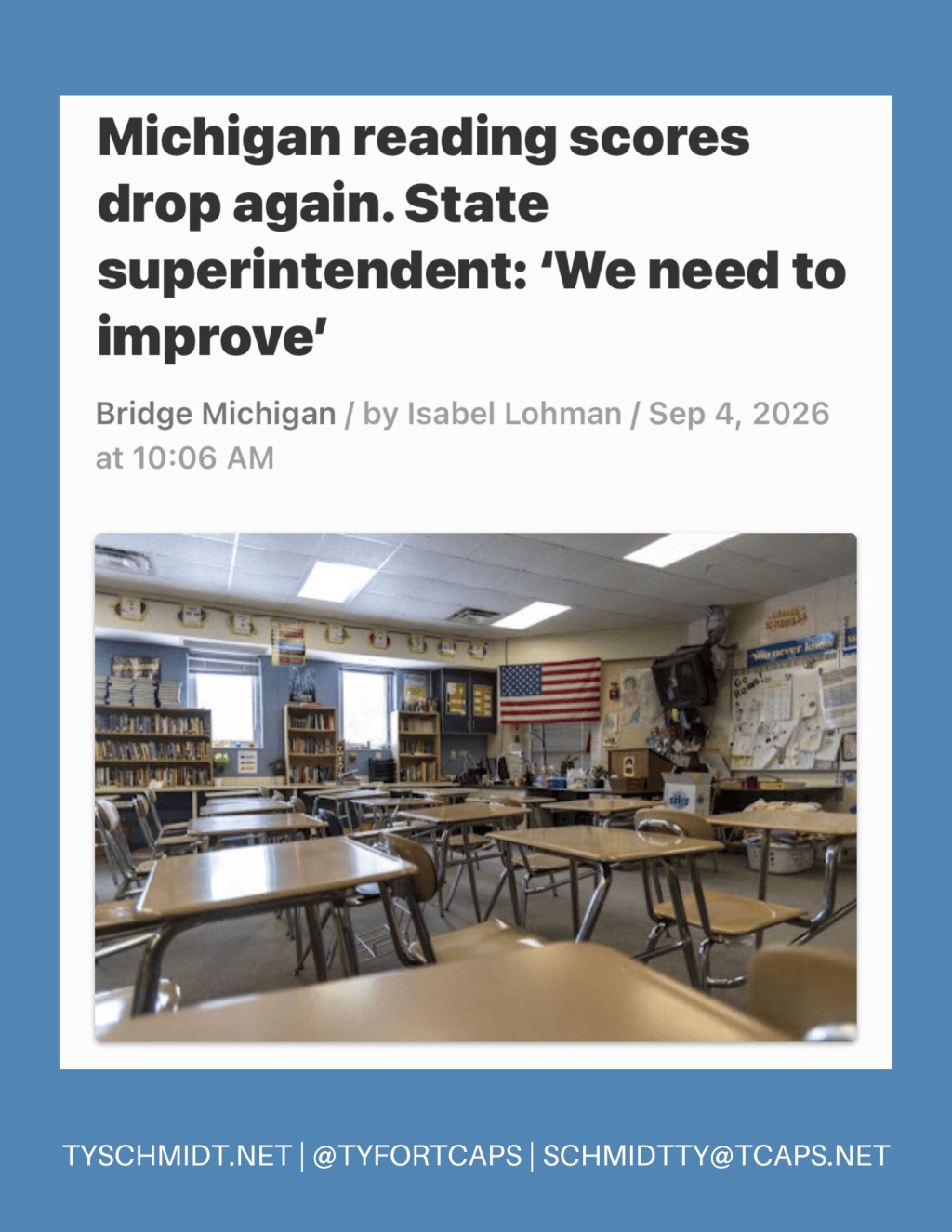
3rd Grade Reading, 4th & 8th Grade Math, 11th Grade College Readiness: A Sampling of TCAPS’ 2026 Student Achievement Outcomes
Our state assessment outcomes for 2025/26 were released to the public last week. Below you’ll find a snapshot of how our students performed in reading, math, and college readiness. I’ve included years of data for context (as well as outcomes for our economically disadvantaged kids and their peers)—and connected these outcomes to the goals in…
-
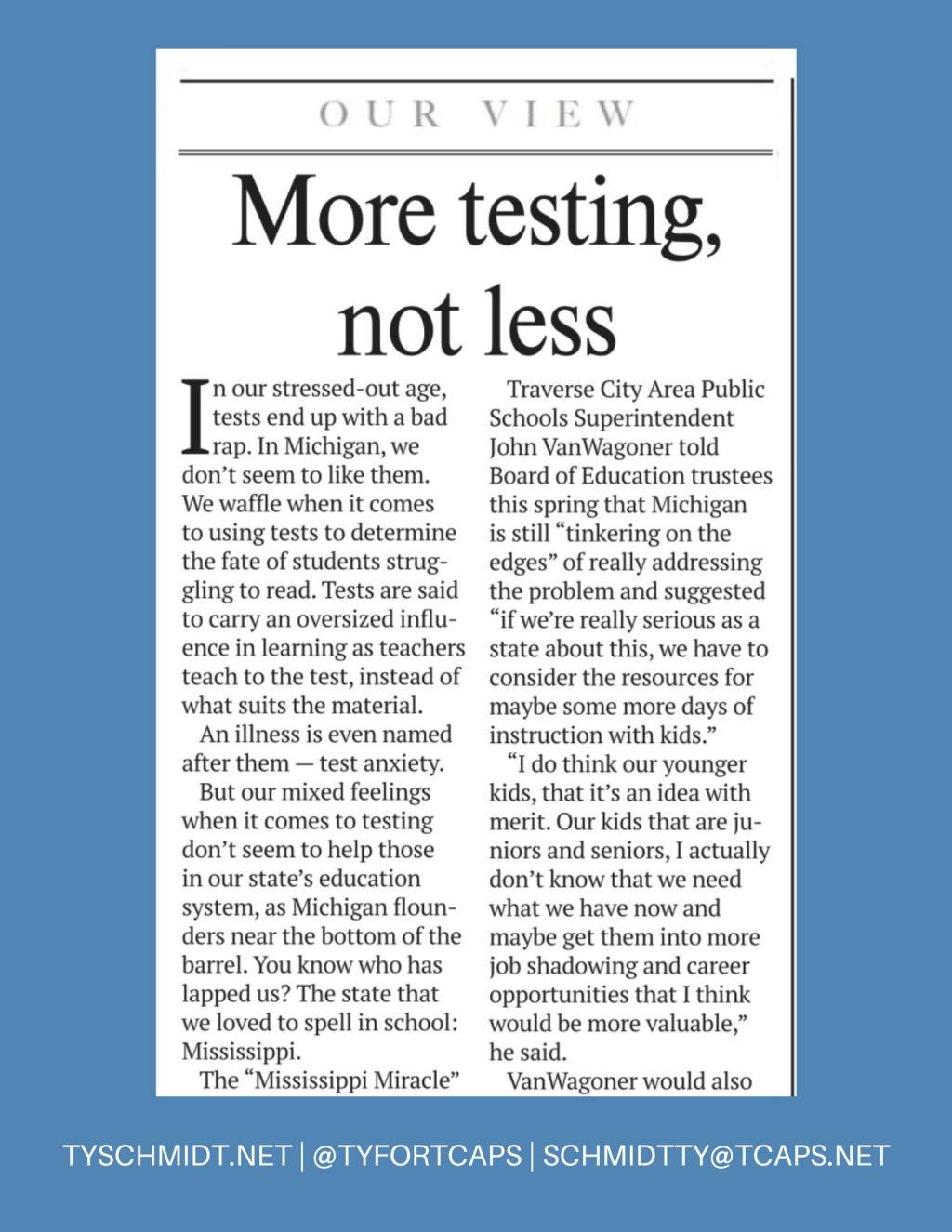
Assessments Should Help Us Teach, Not Just Tell Us What Happened
I appreciate the Traverse City Record-Eagle‘s willingness to put education and Michigan’s literacy challenges in the spotlight in today’s paper.* It’s an important conversation, and one I think all of us – educators, parents, school board members, legislators and community members – need to be willing to have honestly. Michigan’s literacy outcomes are not where…
-
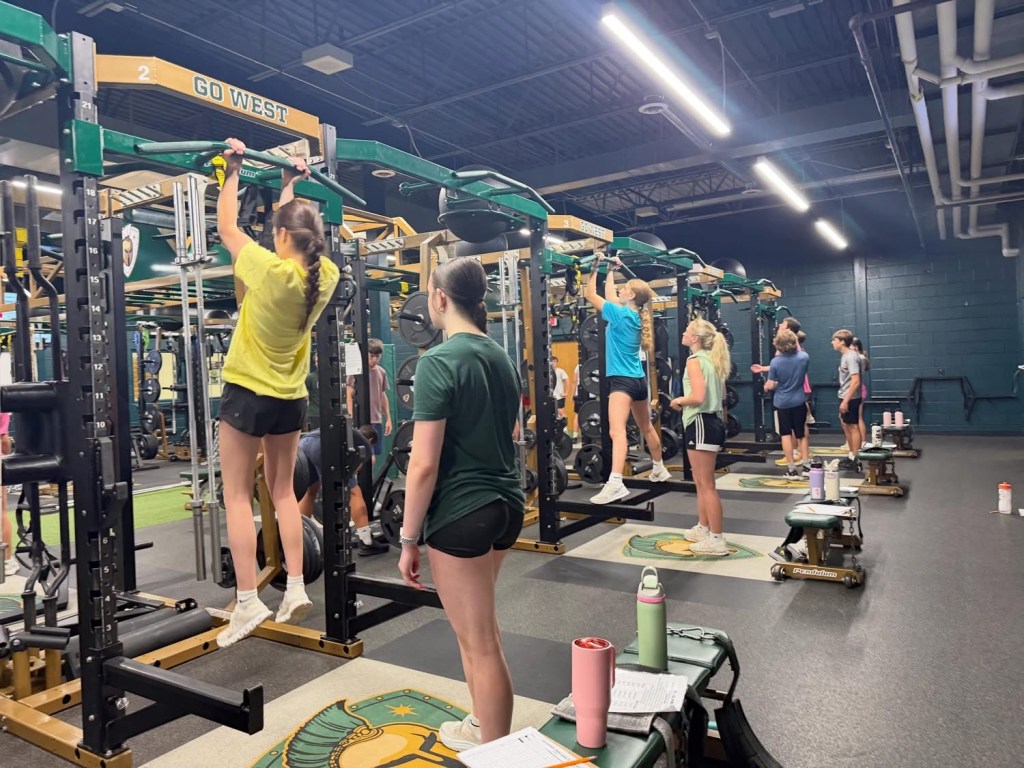
August Newsletter
August’s newsletter is out – have a great rest of the summer, everyone! • 2026 elementary school math/literacy outcomes • 2026 secondary school math/literacy outcomes • Looking beyond the classroom: Lessons from the Kids Count report • Community partnerships: Creating the conditions for student success • More than buildings: Investing in student success • How…
-
Keeping Our Promise: Reporting on the Outcomes We’ve Chosen to Prioritize
One of the promises we made as a Board was to be transparent about the outcomes we’ve chosen to prioritize—and to report our progress along the way. At last week’s Curriculum Committee meeting, we reviewed several of our secondary strategic plan goals, including literacy and math outcomes for 8th graders (PSAT) and 11th graders (SAT).…
-

Measuring What Matters: A First Look at TCAPS’ Progress Toward the 2030 Vision
One of the commitments we made in our new 2030 Vision* was to measure what matters—and to share our progress along the way. At yesterday’s Curriculum Committee meeting, we reviewed our latest elementary reading and math outcomes using the NWEA, our district’s benchmark assessment. Unlike the state assessment (M-STEP), which won’t be publicly released until…
-
More Than Buildings: Investing in Student Success
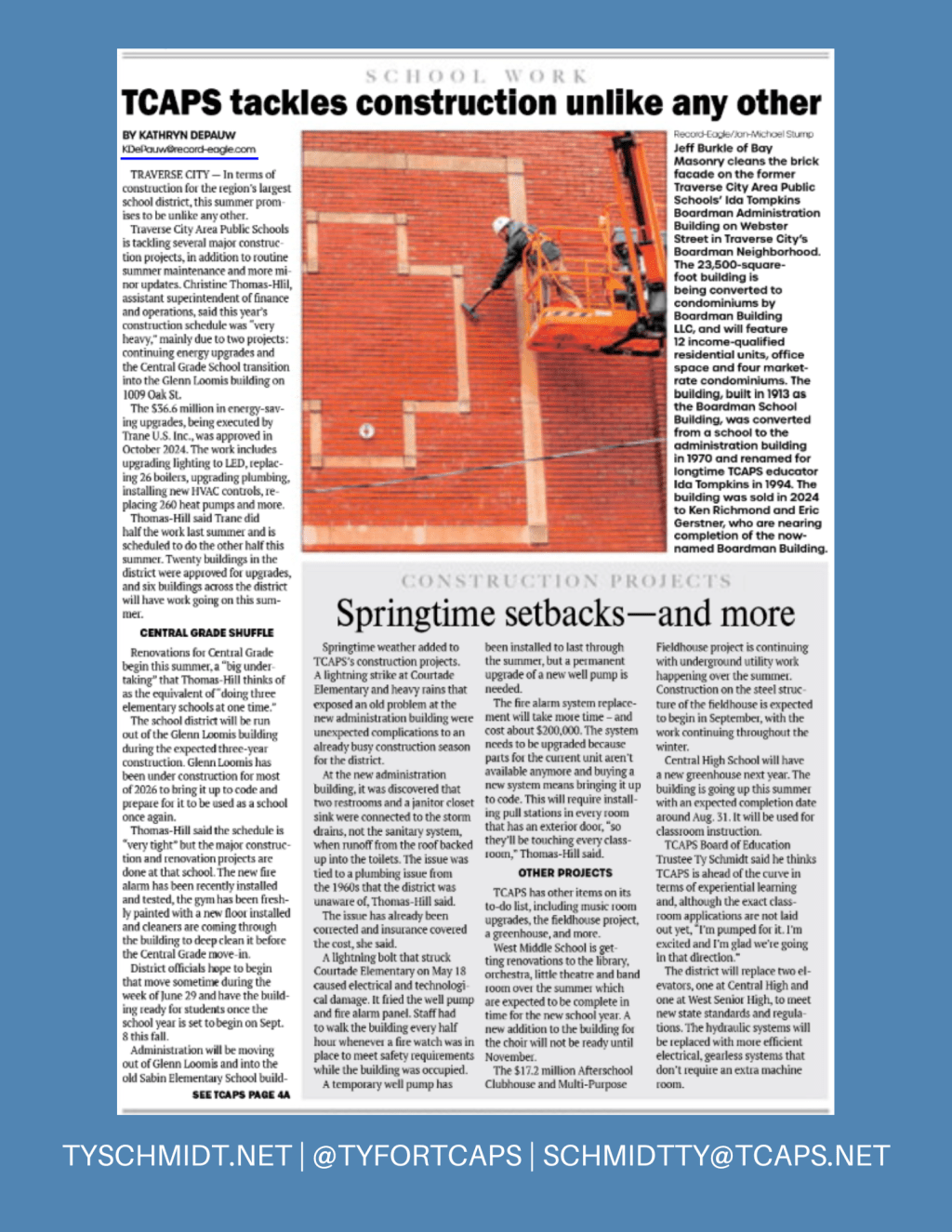
Appreciate the Traverse City Record-Eagle for its coverage of the significant construction work happening across our district this summer. These projects are substantial. From major district-wide energy efficiency upgrades to the Central Grade School relocation and renovation work to ongoing traffic and safety improvements at West Senior High. They reflect long-term investments in the spaces…
-
Looking Beyond the Classroom: Lessons from the Kids Count Report
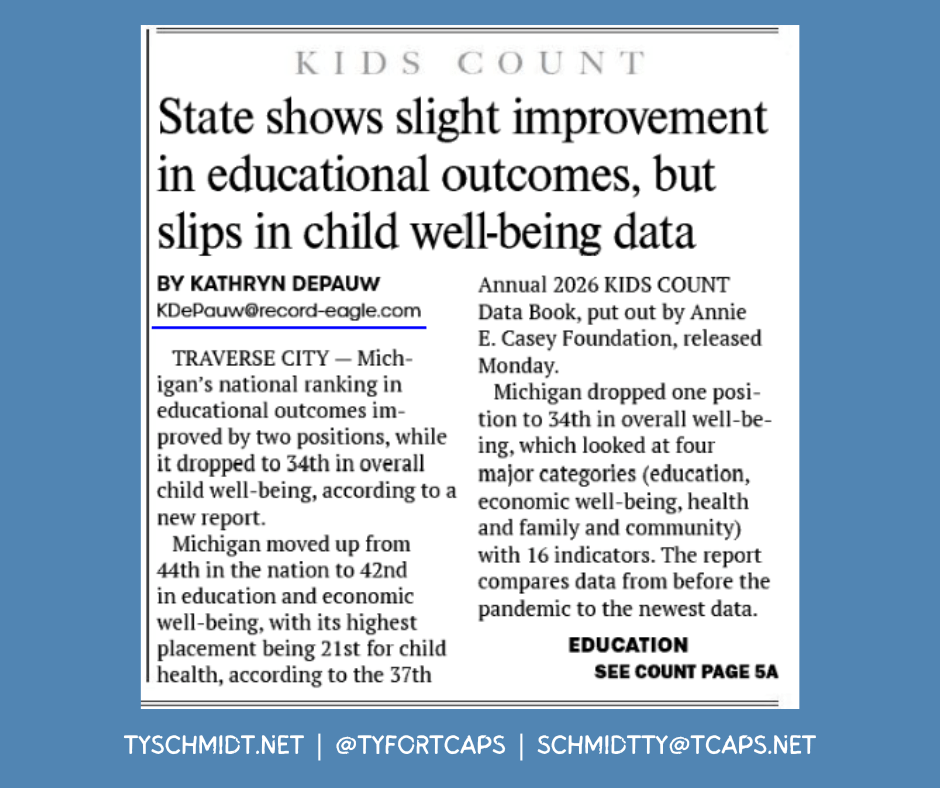
I appreciate the Record-Eagle’s continued reporting on education and Kathryn’s work digging into the data behind this year’s KIDS COUNT report. One takeaway for me is that many of the issues affecting children and families are interconnected: • Reading proficiency • Math achievement • Early childhood opportunities • Physical and mental health • Housing stability…
-
School-Issued Devices, Student Engagement and Outcomes
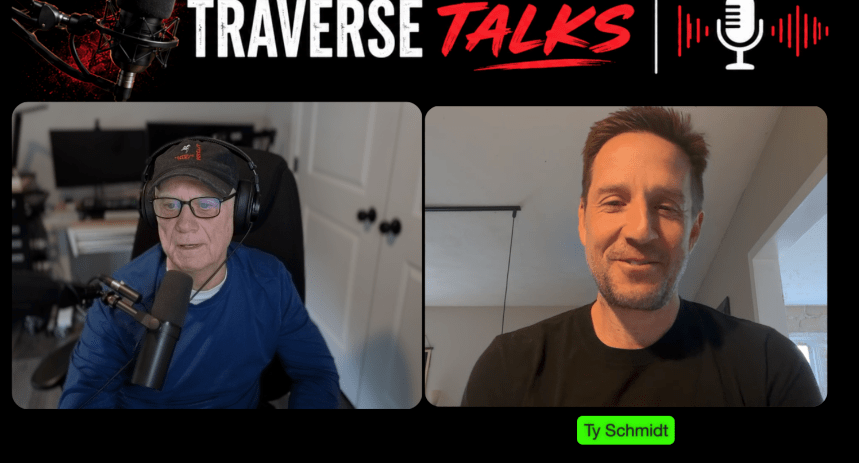
After I shared my thoughts on the recent Wall Street Journal investigation into YouTube, school-issued Chromebooks, and screen use in American classrooms, Jim from Traverse Talks reached out and invited me to continue the conversation on his podcast. We discussed the article and some of the broader questions many communities, including ours, are beginning to…
-
National Headlines, Local Data: Continuing the Conversation About Screens in Classrooms
Following the recent conversation around the Wall Street Journal’s reporting* on YouTube, Chromebooks, and screen use in American classrooms, I wanted to share some information presented at last week’s Curriculum Committee meeting. One finding that stood out: among 127 of our elementary classrooms reporting, the most common Chromebook usage in math, reading, science, and social…
-
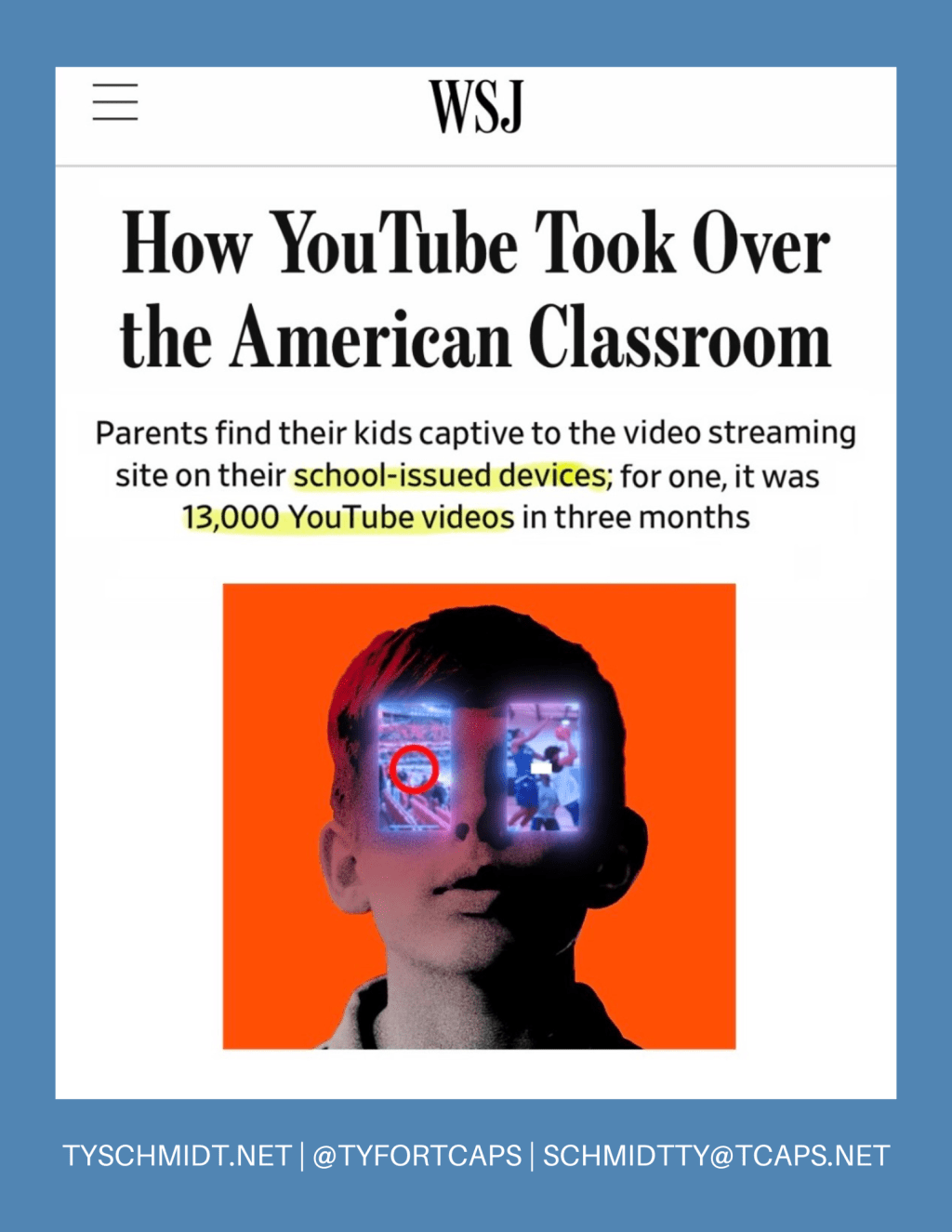
Are Our Classroom Devices Helping Students Learn?
It’s hard to read stories like this one from Thursday’s Wall Street Journal and not feel a mix of concern – and responsibility. A recent report on the role of YouTube in schools highlights something many families and educators are noticing: students spending large parts of the school day on screens – sometimes learning, and…

