At last week’s school board meeting, we discussed changes to our student cell phone and wireless communication device policy.
Part of the reason for the update is a new Michigan requirement that limits students’ use of wireless communication devices during instructional time.
The state law establishes a baseline for districts, including specific exceptions for things like emergencies, health needs, IEP/504 accommodations, and approved instructional use.
For parents and community members, I think it’s helpful to know what that means for TCAPS.
The updated policy uses the broader term “wireless communication devices” to encompass technology beyond cell phones, including smartwatches and smart glasses.
The school board also made some changes to clarify expectations in specific school environments.
Personal devices, including personal computers, are not to be used during instructional time except as permitted under the policy.
And the policy now gives high school administrators the ability to designate appropriate “device-free zones” outside of instructional time when they believe it supports the learning environment.
That includes spaces such as quiet study areas and high school libraries. The policy also establishes restrictions in places such as bathrooms and locker rooms, where keeping devices away is an important matter of student privacy.
I supported the library provision because of a Curriculum Committee presentation we heard earlier this year about something I think deserves more attention: how our high school libraries are helping build school connectedness.
Our librarians described their libraries as the “heart of the school” and, for some students, an important social safety net.
Librarians and paraprofessionals notice when students who normally aren’t in the library suddenly start showing up.
They make time for low-pressure conversations.
They connect students who are struggling with counselors and administrators.
And they create welcoming, low-stakes opportunities for students who may not have found their place elsewhere in the school.
Board games.
Chess.
Crafts.
Student-led activities.
Mentoring.
Community service.
These may seem like small things, but they’re part of something much bigger: school connectedness.
And that connection matters.
What struck me during last week’s discussion was the connection between our updated device policy and the work happening in our libraries.
A device-free space works best when we’re not simply taking something away from students, but when we’re creating something worth coming to.
At the Curriculum Committee meeting earlier this year, our Central High School librarian told us that when the no-phone expectation was first introduced in their library, some students left and spent their free time in their cars.
But over time, as the library became a welcoming place with activities, relationships and trusted adults, those students started coming back.
That’s an important lesson.
Our 2030 Vision* identifies school connectedness and belonging as priorities.
Creating connected schools isn’t just about a policy. It’s about creating spaces where students feel known, welcomed, supported and like they belong.
Our libraries are doing exactly that.
As the start of another school year approaches, I’m grateful to the librarians, paraprofessionals and other staff who are creating these spaces every day – and to the students who are helping make them their own.
Sometimes building a stronger school community starts with something as simple as a place to play a game, make something, talk to someone, or just belong.
 The school board discussion on Policy 5209: https://bit.ly/3U3SFEs
 The Curriculum Committee presentation on high school libraries and school connectedness: https://bit.ly/4gL61x9
 The recommended policy changes considered last week: https://bit.ly/4wyBcSZ
 Our 2030 Vision and school connectedness goals: https://bit.ly/tcaps-values
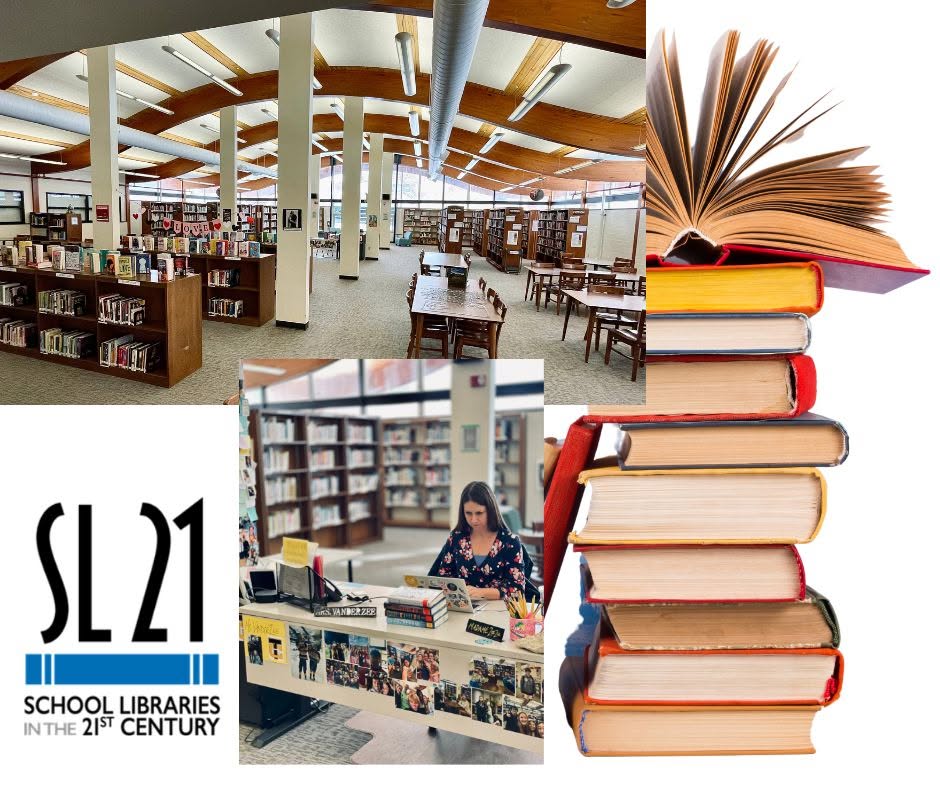
“Congratulations to Ms. VanderZee and our Library and Media Center staff, Ms. Hilner & Ms. Coulter, on an EXEMPLARY 21st Century certification status! This certification comes from the Library of Michigan and is celebrated throughout our state. If you’ve had the pleasure of visiting our LMC, you’ll understand how much our staff deserves this award.
 “
“


Leave a Reply