What will it take to achieve better outcomes for all of our students?
That was really the question behind our study session last night as we looked at reading and math outcomes for Year 1 of our 5-year strategic plan, what we’re already doing, and some potentially big ideas for what comes next.
The urgency is real: roughly 70% of our economically disadvantaged third graders aren’t proficient in reading, and roughly 80% of our economically disadvantaged fourth graders aren’t proficient in math*.
Among the possibilities we discussed:
- More intervention during the school day, including “What I Need” (WIN) or FLEX time at our middle and high schools so students can get extra help without giving up an elective.
- More reading and math intervention staff working with students who need targeted support.
- Expanded summer learning, potentially reaching hundreds of students who are not yet proficient.
- A “Strong Start” in middle school, bringing some incoming seventh- and eighth-graders back about two weeks early in August for extra academic support and help building routines.
- More instructional time, including a pilot already underway at Traverse Heights with K-2 “Word Explorers” to boost vocabulary.
- A longer school year (210 days instead of 180 days) at some elementary schools.
- More instructional coaching and Science of Reading training for teachers.
- Smaller ninth-grade classes in math and English.
- Exploring new curriculum, including a possible new math curriculum and extending Core Knowledge Language Arts (CKLA) literacy into middle school.
We also had a particularly interesting discussion about third-grade reading and retention.
Mississippi has received national attention for its reading gains, and one piece of its approach is a third-grade reading requirement: students who don’t demonstrate proficiency can be retained, with summer school and another opportunity to demonstrate proficiency before moving on to fourth grade.
Michigan no longer has that requirement, and we’d need to learn much more before deciding whether any version belongs here. What struck me most is that Mississippi’s approach starts long before third grade. The real goal is to catch struggling readers in kindergarten and first grade, so that by third grade the question rarely comes up.
One possibility discussed was establishing early agreements with families. If a child is below reading benchmarks, the school and family could commit early to additional supports, potentially including targeted summer learning, rather than letting reading difficulties compound year after year.
None of this has been decided. These are ideas we’re exploring. Some would require staffing, schedule, or contract changes that we’d need to work through with our teachers and staff. Some may ultimately not make sense for us.
But I’m glad we’re asking the questions.
One lesson we discussed came from Mississippi. Mississippi educators aren’t particularly fond of the term “Mississippi Miracle”. Because there wasn’t anything miraculous about it
It was many years of many people working together, trying things, learning, investing, and staying focused on the main thing.
They call it a marathon.
I like that framing.
Our 2030 Vision** asks us to improve reading and math outcomes while closing long-standing opportunity gaps between our economically disadvantaged students and their peers. Those are outcomes our district hasn’t yet achieved.
So maybe we’re in the first few miles of the TCAPS Marathon.
We’ll need to learn what works, strengthen what is working, adjust when something isn’t, and probably try some things we’ve never done before.
The important thing is to keep the main thing the main thing: better outcomes for all of our kids.
Watch last night’s discussion: https://bit.ly/4A0WqKB
Read the meeting presentation: https://bit.ly/4jBlyTb
* Our 2026 state assessment outcomes: https://bit.ly/4ctXRI1
** Our 2030 Vision goals: https://bit.ly/tcaps-values
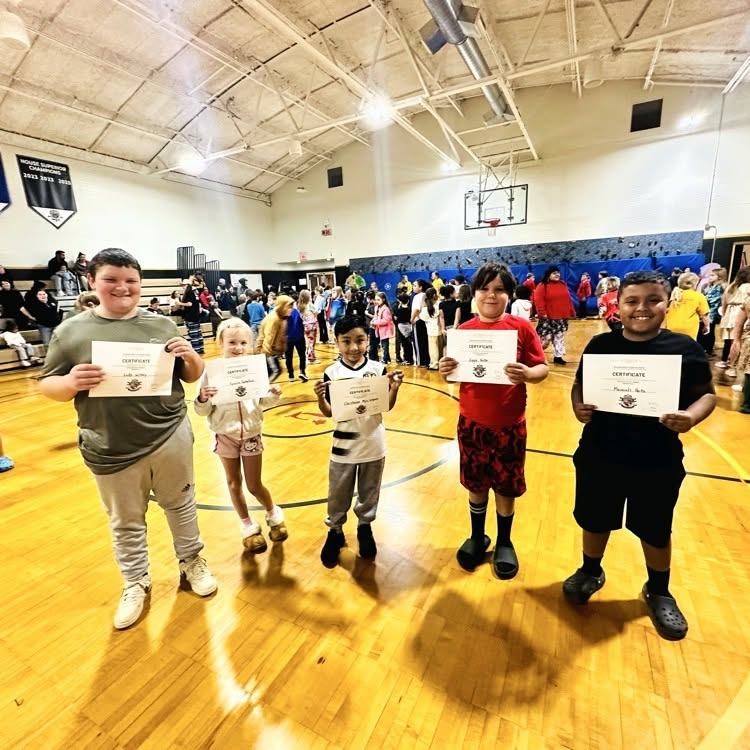
“WE ARE ONE. Congratulations to our Students of the Month!”
PC: Traverse Heights Elementary School – TCAPS
📸 “WE ARE ONE. Congratulations to our Students of the Month!” PC: Traverse Heights Elementary School – TCAPS


Leave a Reply