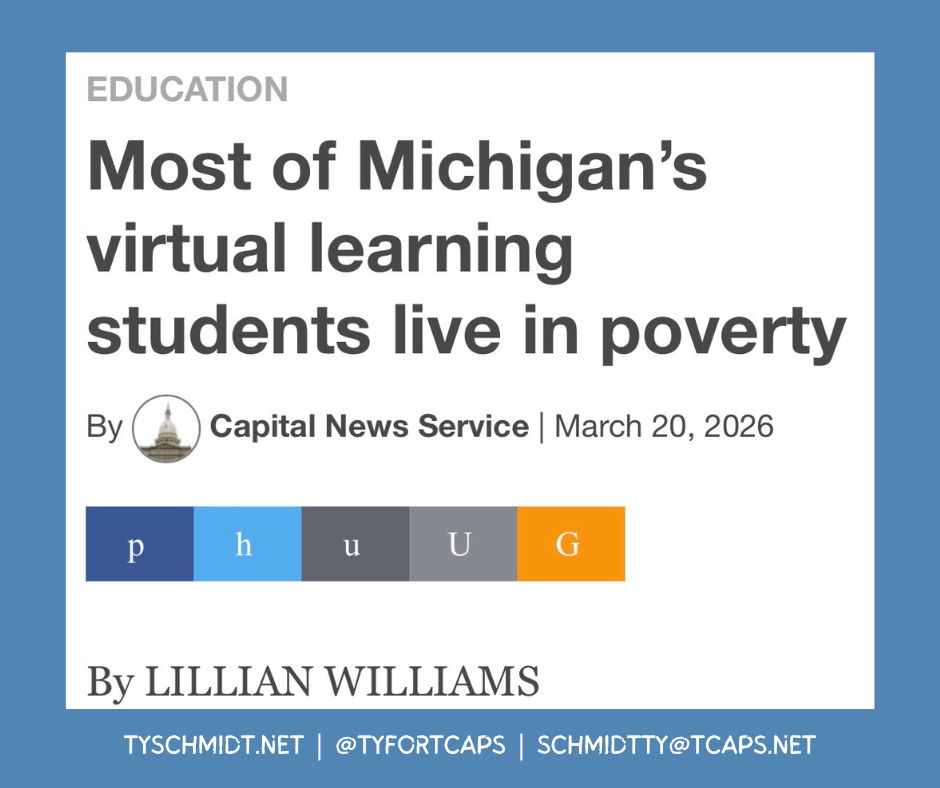
I don’t yet know the percentage of economically disadvantaged students enrolled in our virtual programs.
I do know we’ve expanded our virtual program at Traverse City High School and launched a new middle school option at East Middle School – with built-in adult support and check-ins. That’s a positive step.
At the same time, our middle and high school opportunity gaps remain significant between students living in/near poverty and their peers. Gaps in things like 8th-grade math proficiency, graduation rates, and AP class enrollment.
So as virtual enrollment grows, it’s worth asking a deeper question:
Is this expanding opportunity for all students—or becoming a more common pathway for students already furthest from opportunity?
Virtual learning can absolutely be the right fit for some students. But it typically requires a high level of independence—and the students most often placed into these settings may need the most structure, connection, and in-person support.
This isn’t a criticism of virtual programs. It’s a call to stay focused on systems – and outcomes.
Because ultimately, this work is about ensuring every student has access to what they need to succeed – whether that’s in a classroom, online, or somewhere in between.
Expanding options matters.
So does making sure those options lead to success for all.
Read the Capital News Service story: https://bit.ly/47eQGkr

 TY FOR TCAPS
Leave a comment