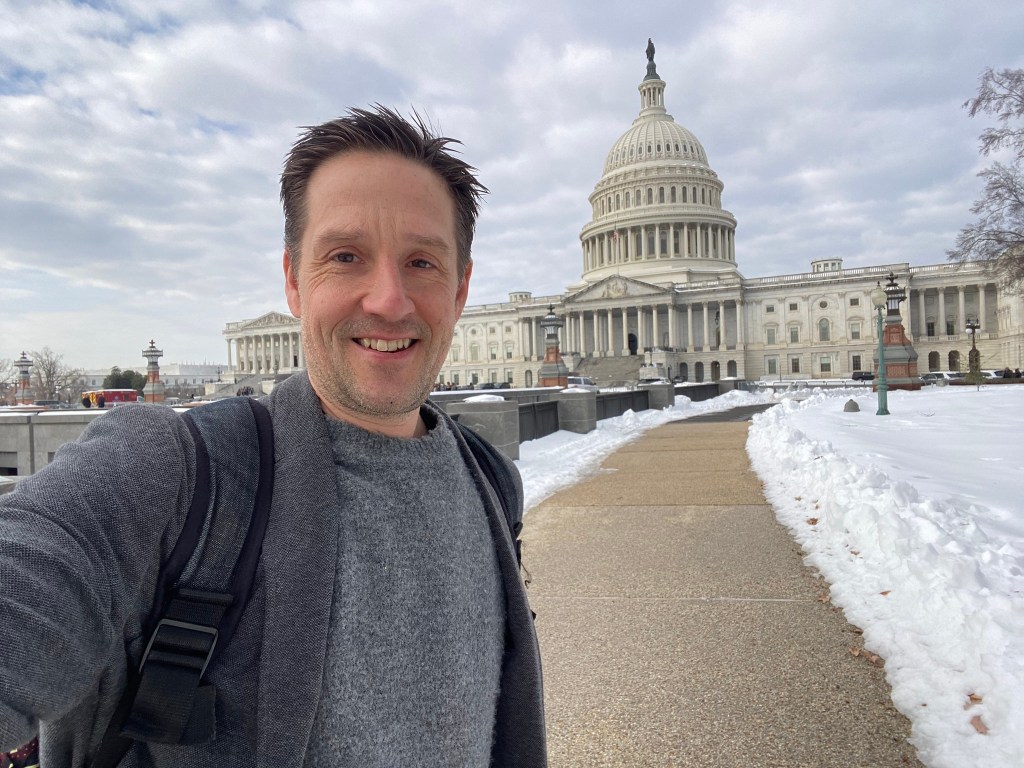
At our Organizational Meeting this year, the Board of Education was clear: when the district invests in professional learning for trustees, we should share what we learn with our community.
After attending the National School Board Association’s Advocacy Institute in DC, I reflected on the experience and what it means for TCAPS students.
Here’s my report, with takeaways, that I submitted to the Board.
Purpose
To summarize key takeaways, policy priorities, and advocacy implications from the 2026 National School Boards Association (NSBA) Advocacy Institute, with a focus on relevance for TCAPS governance and federal engagement.
Overview
The 2026 NSBA Advocacy Institute convened more than 400 school board members from 37 states in Washington, D.C. Michigan sent the largest delegation, with more than 85 participants. I was the first school board member from Michigan’s 1st Congressional District to attend.
The Institute and its four-part Prep Series (session #1 slides attached) reinforced a central message: effective local governance must be paired with strong, consistent federal advocacy to secure the resources and policies students need to succeed.
Participants engaged in general sessions, targeted breakouts, bipartisan policy panels, and congressional strategy briefings. I also attended meetings and events featuring Senators Gary Peters and Elissa Slotkin (see attached MASB update) and participated in a one-on-one meeting with Representative Jack Bergman.
A full list of the sessions I attended is attached.
Key Federal Policy Priorities
Across sessions and advocacy briefings, five interconnected priority areas consistently emerged:
I. Fully Funding and Modernizing the Individuals with Disabilities Education Act (IDEA)
- Addressing the longstanding federal shortfall in special education funding
- Strengthening educator pipelines and support services
- Modernizing implementation to reflect current student needs
II. Strengthening the Educator Workforce
- Sustaining Title II-A professional development funding
- Supporting educator apprenticeship and “grow-your-own” pathways
- Addressing recruitment and retention challenges
III. Investing in Title I and Career & Technical Education
- Protecting and increasing Title I funding for students facing economic challenges
- Expanding high-quality CTE pathways aligned with workforce needs
- Supporting postsecondary and employer partnerships
IV. Advancing Digital Access and Cybersecurity
- Strengthening E-rate and broadband access
- Supporting the FCC Cybersecurity Pilot Program
- Restoring affordable home connectivity for students
V. Prioritizing Student Health, Wellness, and Safety
- Expanding school-based Medicaid services
- Supporting universal school meals and nutrition programs
- Increasing access to mental health professionals
- Investing in evidence-based school safety and indoor air quality
Supporting materials and one-page advocacy briefs for each priority area are attached.
Student Voice and Advocacy
Before traveling to Washington, students from Mrs. Sonnemann-Grams’ class at Traverse Heights wrote opinion pieces (their writing unit in CKLA) about why school matters to them. I had the opportunity to share their writing with Representative Bergman, who expressed appreciation for hearing directly from our students.
This experience reinforced a key theme of the Institute: effective advocacy is grounded in real stories, data and lived experiences. Institute speakers consistently emphasized the importance of connecting policy decisions to the daily realities of students, families, and educators.
Values and Governance Implications
Underlying the Institute’s work was a strong emphasis on advocacy that is:
- Values-driven
- Human-centered
- Grounded in opportunity, fairness, and success for every student
Federal policies discussed are not abstract. They directly affect classroom instruction, staffing, student services, and family stability in our community.
As a governance body, this reinforces the importance of:
- Monitoring federal developments closely
- Continuing to elevate student and community voices and stories with data
- Supporting coordinated federal advocacy through MASB and NSBA
Conclusion
Participation in the NSBA Advocacy Institute and its 4-part Prep Series strengthened my understanding of how federal policy intersects with TCAPS’ strategic goals and our daily operational systems. It also reaffirmed the critical role school board members play as advocates for equitable access, inclusive excellence, and long-term student success at the federal level.
I am grateful for the opportunity to represent TCAPS in DC and to bring our district’s data and story forward. I look forward to continuing this work in partnership with the Board and administration to advance success for every student.
Attachments:

 TY FOR TCAPS
Leave a comment