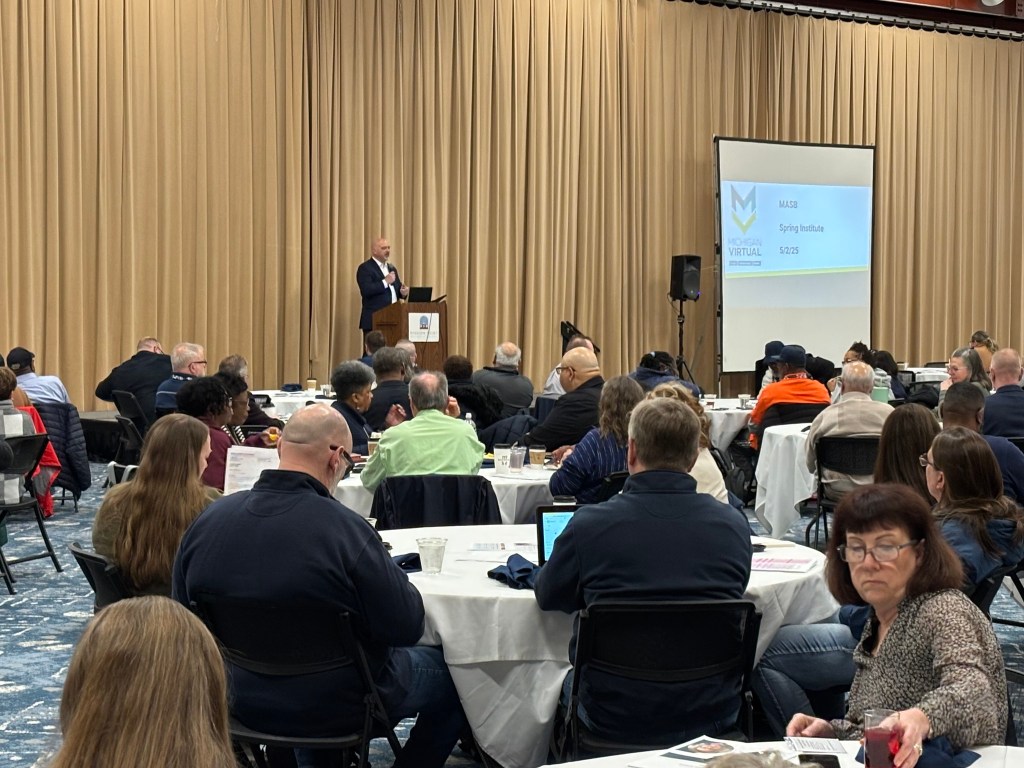
Last weekend, I had the opportunity to attend the Michigan Association of School Boards’ (MASB) Spring Institute—a powerful gathering of school board members from across the state.
The sessions were packed with inspiration, practical tools, and thoughtful conversations about how we can better serve students, families, and our communities.
Here are my five key takeaways:
1. AI Is Here to Stay—And It Can Help Advance Equity
AI isn’t a futuristic novelty—it’s already transforming classrooms, operations, and decision-making in public education. But it’s not about jumping on the latest tech bandwagon. The message was clear: don’t start with the tool, start with your “why.”
AI should support—not distract from—core learning goals and student success. Used thoughtfully, AI can help identify achievement gaps, personalize learning, streamline administrative tasks, and support educators in closing opportunity gaps. Equity must remain the north star.
2. Celebrate Policy and Strategic Plan Wins Publicly
Policy isn’t exciting to everyone—but progress is. One of the most powerful tools school boards have is storytelling. Celebrating successes tied to district policies and strategic priorities not only builds trust, it brings the community along with you.
Sharing wins—big and small—early and often helps build momentum. It reinforces a shared commitment to the mission, vision, values, and goals we hold as a district.
3. Hold High Expectations for All Students
Every student deserves the opportunity to succeed—regardless of income, language, disability status, or background. The research is clear: when adults hold high expectations, students rise to meet them.
This means ensuring that every student has access to advanced coursework, enrichment opportunities, and rigorous instruction—regardless of their zip code or how much their parents make. It also means challenging deficit-based assumptions and advocating for inclusive, affirming learning environments. All means all.
4. Define and Monitor Policy and Goal Outcomes—Always
Setting the course for a school district goes beyond writing policy or setting goals. Boards must define clear, measurable outcomes—and monitor progress consistently. Do not approve district goals that are hard to measure.
Without monitoring, a goal is just a wish. Regularly reviewing data and outcomes ensures that strategic plans and policies are truly improving student experiences and outcomes. This is how we stay accountable to our communities and, most importantly, to our students.
5. Advocacy Matters—A Lot
It’s no secret: the majority of funding for public schools comes from the state. Decisions made in Lansing affect everything from classroom sizes to special education services, school meals, and transportation.
That’s why school board members must be active advocates. Engaging with legislators, understanding proposed bills, and speaking up for local needs isn’t optional—it’s essential. Advocacy is part of the job, and no, “lobbying” is not a four-letter word.
The MASB Spring Institute reminded me that school board service is about vision, strategy, and stewardship—but it’s also about heart. I’m grateful for the opportunity to learn with and from others who care deeply about public education in Michigan.
Let’s keep learning—and keep leading.

 TY FOR TCAPS
Leave a comment