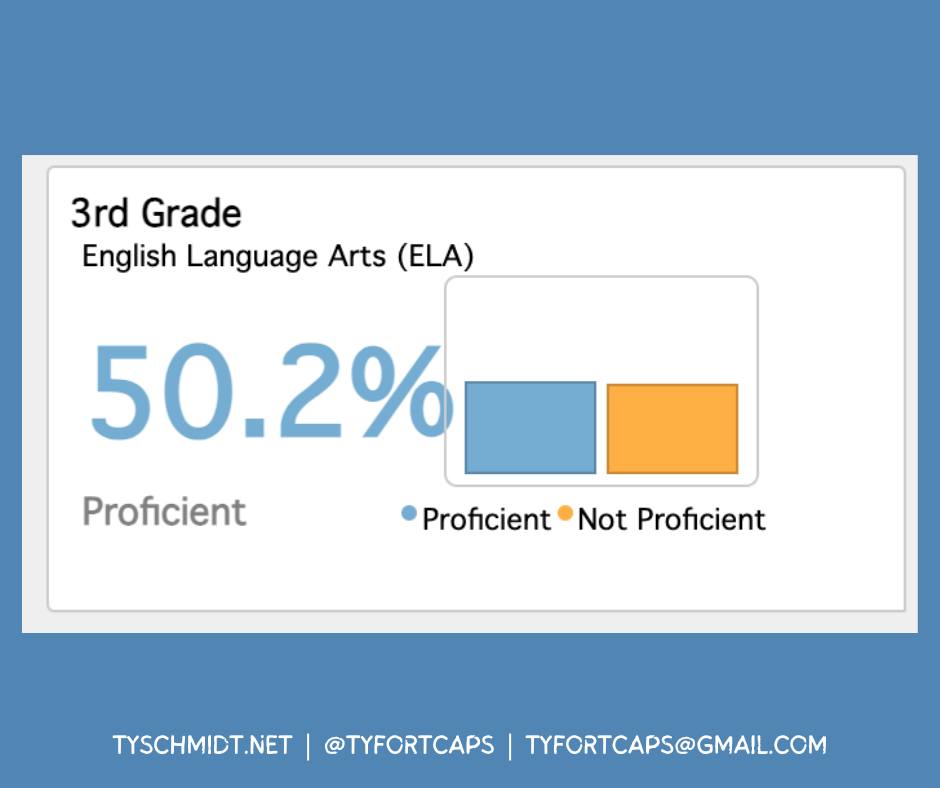
50% (229)* of our at-risk opportunity 3rd graders (452)** are not proficient in reading.
Are we doing everything we can to help our kids who are furthest from opportunity succeed?
Solutions
We (our community) can do a better job of helping all of our kids succeed by:
- Leveraging best practice policies to close the district’s student achievement gap
- Revisiting the Educational Equity listening tour findings by Digital Promise and the Learner-Centered Collaborative
- Reviewing policy of split classes with many at-risk opportunity kids (and in our Title 1 schools)
- Reviewing policy of class sizes with many at-risk opportunity kids (and in our Title 1 schools)
- Building more classrooms at schools with many at-risk opportunity kids to accommodate above [ie. 2024 bond funds will help Traverse Heights expand]
– Reviewing how we invest our 31a and Title 1 (at risk opportunity) dollars
- Expanding after-school offerings for our at-risk opportunity kids (and at our Title 1 schools) like Courtade’s STEM program – Creative Explorers
- Adding student achievement gap goals to the district’s next strategic plan (current one expires in 2025)
- Improving equitable access to out-of-school enrichment opportunities (after-school and summer)
- Building a sustainable pool of reading mentors for all of our elementary schools
– Supporting local early childhood literacy efforts like Born To Read, Books From Birth, Dolly Parton Imagination Library, TADL’s programs
Other ideas?
Do you have other ideas on how we can do more to help our kids who are furthest from opportunity succeed?
I’d love to hear them.
*most recent data – 2023/24
** A student is considered at-risk to be an opportunity student if they meet any of the following factors:
– Economically disadvantaged
– English learner
– Chronically absent as defined and reported to Center for Educational Performance and Information (CEPI)
– Victim of child abuse or neglect
– Pregnant teenager or teenage parent
– Family history of school failure, incarceration or substance abuse
– An immigrant who has immigrated within the immediately preceding three years
– Did not complete high school in four years and is still in school
– Did not achieve proficiency on the English Language Arts (ELA), mathematics, science or social studies State summative assessments
– At risk of not meeting the Local Education Agency’s (LEA) core academic curricular objectives in ELA or mathematics based on local assessments
– Pupils who are eligible for the homeless, foster care and migratory programs are automatically considered economically disadvantaged and are to be identified as such in the LEA’s student information system

 TY FOR TCAPS
Leave a comment